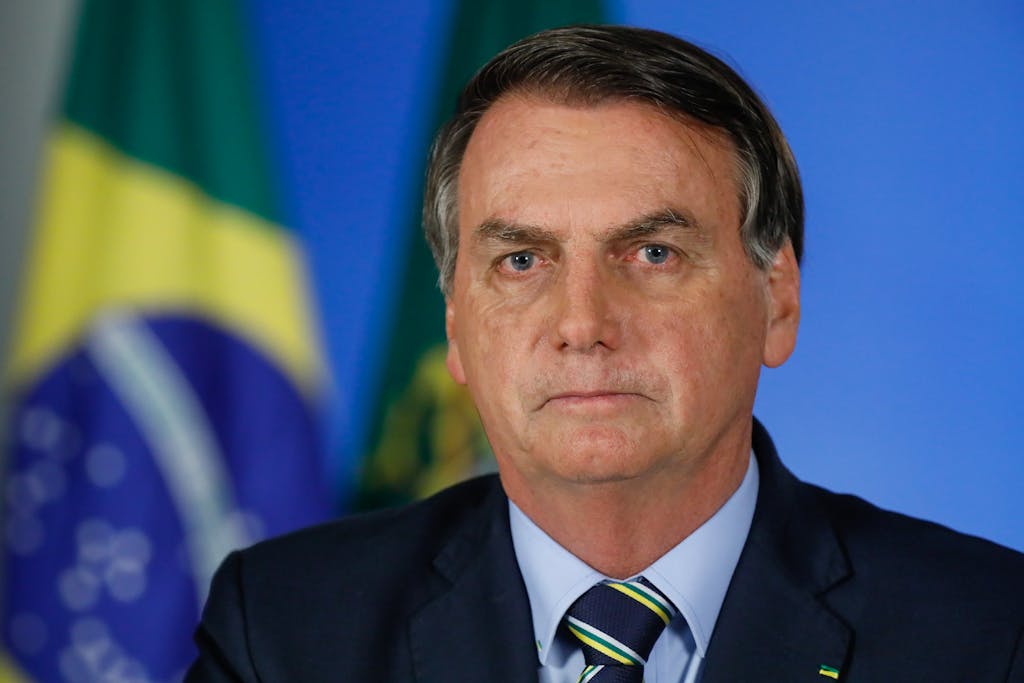
First of all, thank you Mr. Bolsonaro for taking the time to do this interview. Here at Plastic Fake Tree the focus is naturally on the environment, and that is what this interview will also largely focus on. Our readers have great concerns at the moment regarding the Amazon rainforest and how you, Mr. President, and your administration, are taking care of it. We highly appreciate this opportunity to discuss these matters with you.
President Bolsonaro: Thank you for inviting me. I will gladly discuss these matters with you.
Economy, sustainability and growth
You come from a business background and are known as a spokesperson for industry. Do you see that Brazil is able to grow its economy sustainably, without endangering the environment?
President Bolsonaro: Absolutely, yes. The economy is the backbone of this country, and of any country for that matter. We need the economy to grow in order to raise the living standards in this country. We are blessed with plentiful natural resources and we must make good use of those. It is exactly what every country does, they make use of what they have. We are no different.
The need to grow is understandable, but what about the sustainability of that growth? The rising prices of agricultural products such as soy have meant very good times for Brazilian farmers. However, it would be senseless to turn vast tracts of the Amazon rainforest into soy fields. Yet this is more or less what has been happening recently.
President Bolsonaro: As I said, we need to make use of what we have, and what we have is prime farm land and timber. The rainforest covers a vast, vast area of land. This provides a huge number of people with jobs and a steady income. Brazil's agricultural, timber and mining sectors are doing exactly this and will continue to do so in the future.
The Brazilian farming industry has been accused of not being very efficient. It is said that there would be much less need to expand to new areas if the current farm land was used more efficiently. This would greatly reduce the pressure on the rainforest.
President Bolsonaro: The Brazilian agriculture industry is no less efficient than anything the Western World has, I am sure of it.
One example of this inefficiency is clearing land by resorting to purposeful forest fires, which farmers have been accused of and which you have actually also admitted to be the case. This does not sound like the most efficient or at least not the most environmentally friendly way to get new farming land.
President Bolsonaro: We can not control what each and every farmer chooses to do. Besides, forest fires are difficult to avoid completely anyway during the dry season. Some farmers also resort to these methods because they don't have the necessary machinery or manpower for logging.
Deforestation
Bolsonaro: Deforestation, I believe, is not the most urgent matter at hand.
In a climate summit headed by President Biden earlier this year you promised to bring illegal deforestation to a halt by 2030. Some have dubbed this the "policy of not really doing anything". 2030 sure seems far away and the goal you have set there not very ambitious. Earlier presidents have used strong methods to stop illegal activities in the Amazon, for example by bringing in the military. Would you not be able to do the same immediately if you wanted?
President Bolsonaro: The question of illegal deforestation is not simple to answer. I do not believe using our military to stop it is the right way to go forward. At this time we need to focus our efforts in restoring our economy back to full health after the covid pandemic. Deforestation, I believe, is not the most urgent matter at hand.
I see, but, however, we have read many reports of how well-armed the illegal loggers and other groups are. Wouldn't some sort of armed forces such as the military or the police be the right choice in order to secure peace and stability in the area?
President Bolsonaro: Again, these reports exaggerate matters. Our police forces already cover the entire country and provide security. I would also add that perhaps there are individuals or groups or businesses operating in this country who feel threatened by something and they want to carry arms for self-defense. There is nothing wrong with that.
Recently you ordered major budget cuts for the ministry of environment. This came right after your promise to stop illegal deforestation by 2030, which in itself was already a rather unambitious and questionable goal. Wouldn't you say that these budget cuts are counter-productive to any claims you might make about doing something to protect the environment and the Amazon in particular?
President Bolsonaro: Recovering from the global pandemic and reversing its effects on the Brazilian economy require some sacrifices. Our limited funds needed to be reallocated to ensure we can continue on the path of economic growth. The ministry of environment still has a hefty budget at its disposal to run its operations. Towards the end of the decade we can slowly increase that budget if the economic situation allows us to do so.
In fact, I believe that economic growth is exactly what we need now and in the next few years to raise funds for other purposes, such as environmental protection. All our efforts now must be put into this growth, into creating jobs and into increasing our exports. Frankly, some sectors of our economy have been lagging behind our competitors due to environmental constraints. They have been too harsh on our economy and it is now time to turn that around.
The scientific community is warning that there might not be any rainforest left by the end of the century as the area will turn into a savannah. This will have devastating effects on the climate globally. In 2020 the deforestation of the Amazon was the worst in 50 years. Taking into account your strong focus now on growth and relaxing environmental rules and regulations, will there still be a rainforest in 2100?
President Bolsonaro: Most definitely there will be, no doubt about that. The rainforest is vast and it is not going anywhere. However, it is continuously evolving and changing, both naturally and through human action. We don't really know what we have in 2100, it is impossible to look that far into the future. But I guarantee that the forest is not disappearing completely, only evolving.
For example Greenpeace has called for a complete ban of all expansion of all industry in the Amazon area for at least four years to give the forest time to recover from the disastrous fires and illegal logging of the past couple of years. Would you be willing to agree to this?
President Bolsonaro: That will not be possible, I'm afraid. The worldwide pandemic has hit hard also on the Brazilian economy and we need all possible help we can get to get our economy back on its feet. This includes extending farming, mining and logging industries into new areas.
Native peoples
Bolsonaro: Most of those [native] people, if you ask them, actually want to leave their traditional lifestyle.
The planned changes to requirements for native peoples' evidence of land ownership have recently caused demonstrations in Brazil. They fear that their lands will be encroached into for purposes of agriculture and mining.
President Bolsonaro: I see this very differently. In my mind we are offering these people a chance to progress, move up in the society, improve their lives considerably. They live in areas with plenty of natural resources without any knowledge of how to make good use of them. We can bring these people education, healthcare and prosperity and --
...but they have not specifically asked to be given this in exchange for their land. They seem to be happy where they are, following a more traditional lifestyle, don't you think?
President Bolsonaro: Yes, perhaps so, but we can not let them stand in the way of progress. It is inevitable that tribal life in Brazil is not an option in the 21st century. It can not coexist with a modern society.
When other nations have called for better management of the Amazon rainforest, even hinting at the possibility of taking the forest under international control, you have called these talks "colonialism". However, many people argue that your treatment of the native peoples of the Amazon area is itself an example of how native peoples around the world were treated during the colonialist era.
President Bolsonaro: I think it is absurd to suggest something like that--
Is it really absurd since you just said that your plan is basically to incorporate the native peoples into the modern society in Brazil.
President Bolsonaro: Incorporation should be understood in the most positive sense here. Most of those people, if you ask them, actually want to leave their traditional lifestyle. They want to embrace our modern civilization and all its benefits. This is inevitable, it would happen anyway, we are simply advancing it somewhat.
Politics
You and former president Trump are both businessmen at heart. Would you say that you got along well with President Trump? You probably share similar views of the world, the economy and also the environment?
President Bolsonaro: I would say so, yes. Both Trump and myself think first and foremost about our national interests. Definitely we also share an interest in the economic performance of our countries and do our best to clear out any obstacles in the way of economic growth.
It was widely rumored that in your meeting with President Trump he promised not to say a bad word about Brazil's management of its natural resources in exchange for lower import duties on American goods into Brazil. Care to comment on this?
President Bolsonaro: I'm afraid this is one of those infamous "fake news", once again. Trade relations between our countries were discussed, naturally, but Trump made it very clear that he had no interest in how Brazil manages its own natural resources. I should add that he did not say that in exchange for anything. It was simply a statement he made, and he did not want anything in return.
Surely you must have been pleased to hear that the United States was not following the example set by the European Union, which was appalled by the devastation of the Amazon rainforest at the time.
President Bolsonaro: Finding like-minded people is always a good thing, of course. Admittedly I was pleased to meet with a head-of-state who respected our sovereignty over our territory, yes.
Climate change and the Paris Climate Accords
President Trump was strongly opposed to the Paris Climate Accords and actually withdrew the United States from the deal almost first thing when taking office. Brazil is still on board the deal, but has shown much reluctancy when it comes to making compromises. The Glasgow climate convention is coming up soon. What will be Brazil's stand this time? Any visible change in either direction, either for more ability to compromise or something opposite such as completely withdrawing from the deal, even?
President Bolsonaro: We have no plans to withdraw from the Paris agreement. Our stand remains the same, though. We will not go along with the most rigorous demands for carbon trading and we can not accept rules regarding carbon emissions which are unfair for Brazil and our timber, agriculture and mining industries. We have made this very clear already in the past conventions.
According to the scientific community we have little or almost no time to limit global warming to 1.5 degrees Celsius. The Amazon rainforest is hugely important to all of this due to its ability to contain significant amounts of CO2. It is also estimated that the rainforest produces 30 per cent of the world's oxygen. In light of this information, wouldn't you say it is imperative that Brazil takes quick and decisive actions in protecting the rainforest?
President Bolsonaro: I believe we are making a good compromise between protection and utilization. We can not simply protect everything and stop utilizing our natural resources. Doing that would bring our economy to a complete halt.
Summing up
Bolsonaro: We need to recalibrate our protection efforts so that they don't get in the way of economic success.
Isn't the utilization of the country's natural resources currently voiding any minor attempts to protect them? Taking into consideration the aforementioned budget cuts, changes to legislation, undermining native peoples' rights to their lands, and so on and so on?
President Bolsonaro: I do not think so, absolutely not. All the things you mentioned there, which we have discussed during this interview, should not be taken only as negative things. All of those are helping this country become stronger economically and more equal in terms of living standards and quality of life. We are able to do all that by utilizing our plentiful natural resources. Protection of the environment is still important, but we need to recalibrate our protection efforts so that they don't get in the way of economic success.
A direct question, if you don't mind. Are you silently approving - if not outright encouraging - any actions, even illegal ones, that individuals or corporations make in order to boost the economy?
President Bolsonaro: First of all, I do not have absolute power and control over individuals and corporations. We have laws and regulations and people working in law enforcement to make sure illegal activities such as logging do not happen. That is not my job to do.
Well, perhaps not directly, but as the leading political figure in the country you must have the ability to influence the way people think, leading by example.
President Bolsonaro: I agree. Right now the people of Brazil look up to me as the leader who is guiding this country out of the covid pandemic, making this country even stronger than it was pre-covid.
Looking outward, however, the international community would like to see something more from you than just strong focus on the economy. As important as international trade and improving standards of living are, it is clear that those things should not come at the expense of the environment. After all, deforestation and climate change may have radical implications on Brazil as well. Would it not make sense to look at things in the longer term, emphasising environmental protection now, to ensure better lives for all in the future?
President Bolsonaro: We can not see far into the future. What we can see is the next one or two years ahead, and trust me when I say that we have a very clear idea about where to take Brazil in that time and how to get there. It will benefit not only Brazilians but everybody else too. I don't see any reason to worry.
Thank you for this interview, President Bolsonaro, this has been very enlightening, albeit a bit unnerving at the same time.
President Bolsonaro: Thank you, and trust me, there is nothing to be worried about.
